
We need to talk about creativity! by Adam Annand
The Speech Bubbles drama session comes to an end; ten children and two adults are sitting in a circle, having just spent 45 minutes together playing games and acting out a story. They pass around a stuffed animal, the group’s mascot, taking it in turns to share what they enjoyed in the session today. A couple of the children say ‘everything’ and are encouraged to choose a specific moment or activity. A couple more mention one of the repeated activities, the Speech Bubbles chant or the bucket game. Mostly, they reference the story: that week’s unique offering from one of their peers.
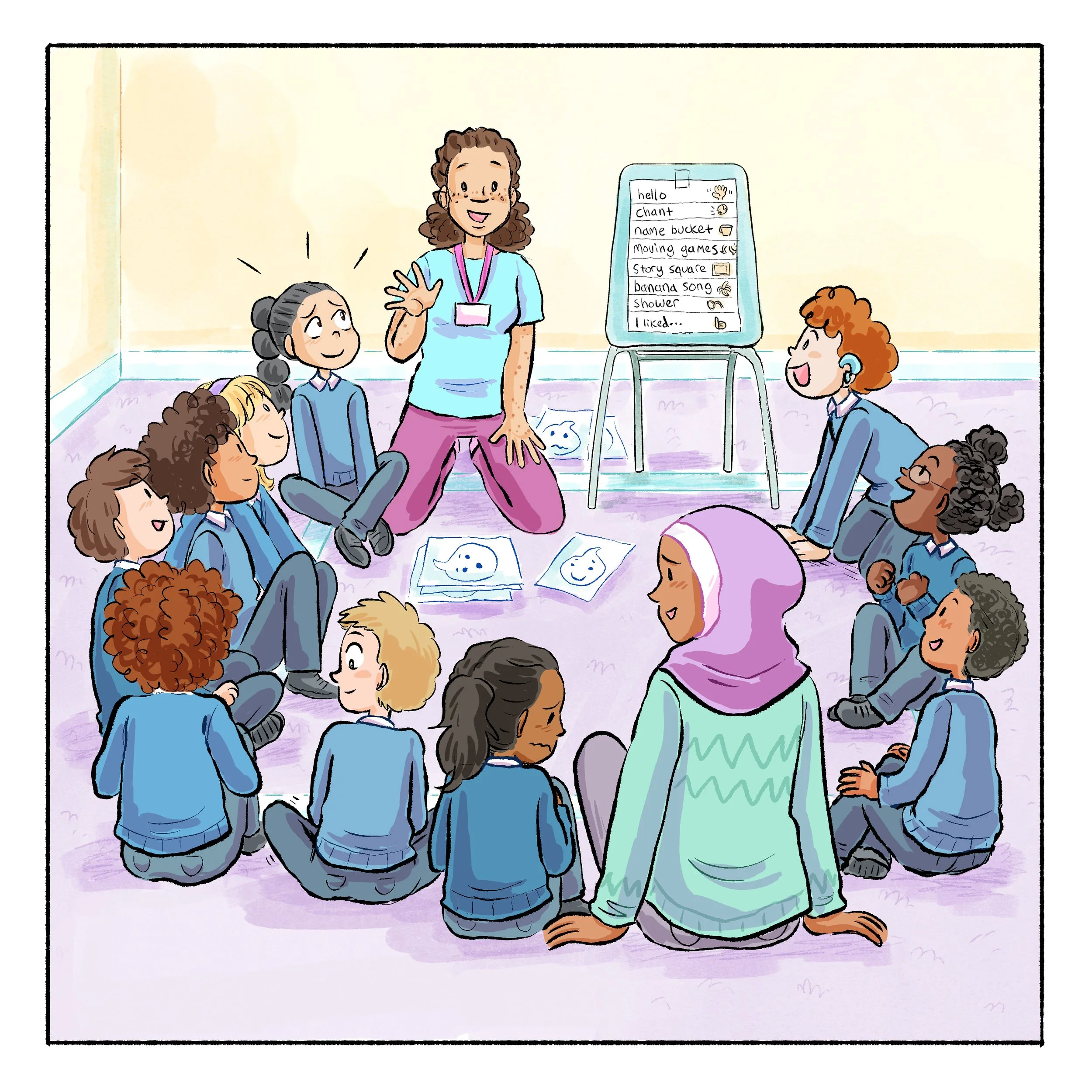
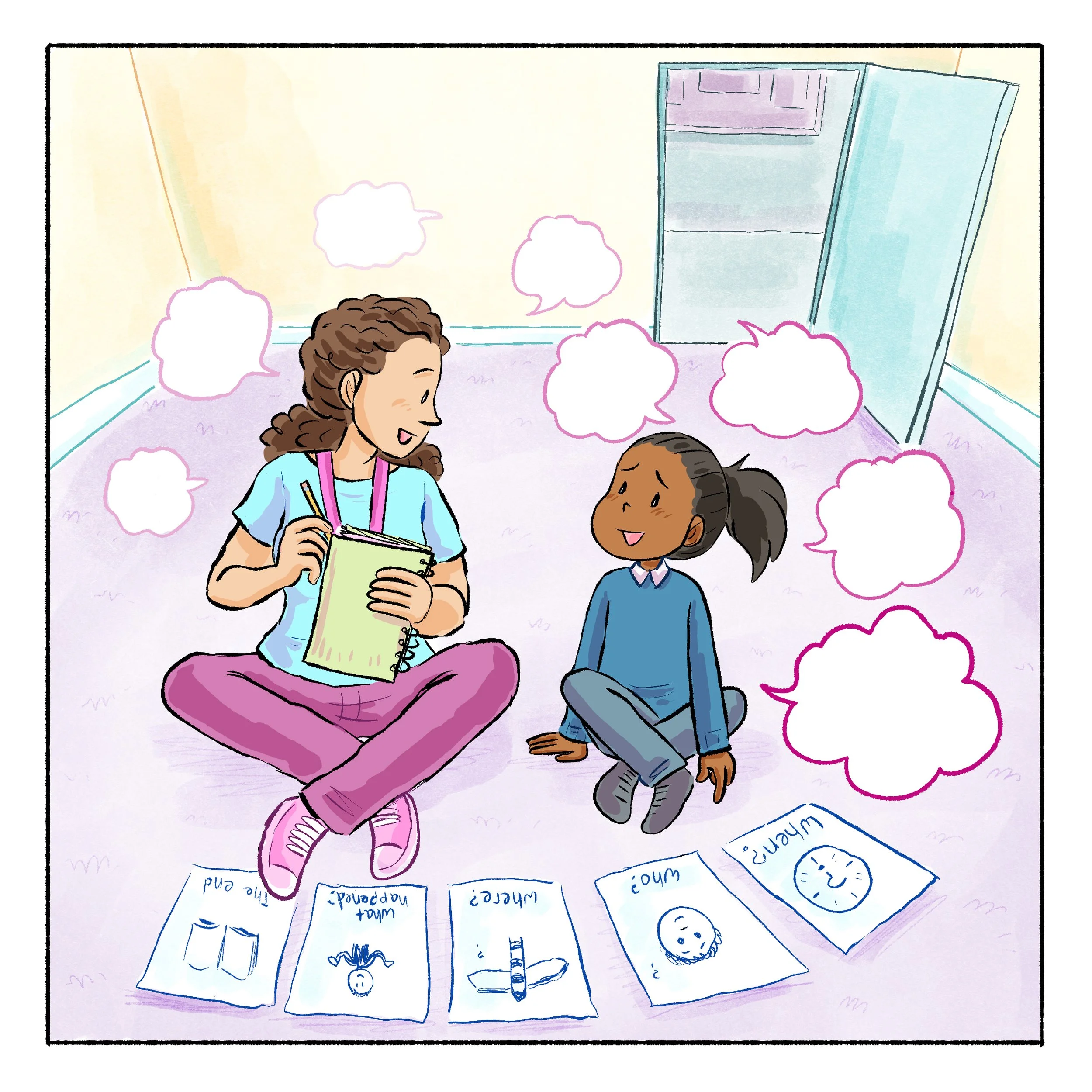
And now it’s time to collect a story for next week’s session. One child stays behind and sits next to the drama practitioner, who has their notepad open and pen at the ready. The drama practitioner makes the invitation: ‘What’s your story?’ Over the next few minutes, the page is populated with that child’s unique imagined story.
‘I love the stories the children tell – they just flow out of them.’ Donna, Lead Teaching Assistant
Creativity first…
Creativity and theatre-making have always been central to Speech Bubbles practice. The programme draws on progressive traditions of improvised, community, devised, immersive and physical theatre, as well as the participatory practice of theatre-in-education. It also borrows and adapts from drama-in-education conventions including improvisation, world building, image work, teacher-in-role and pupil-in-role.
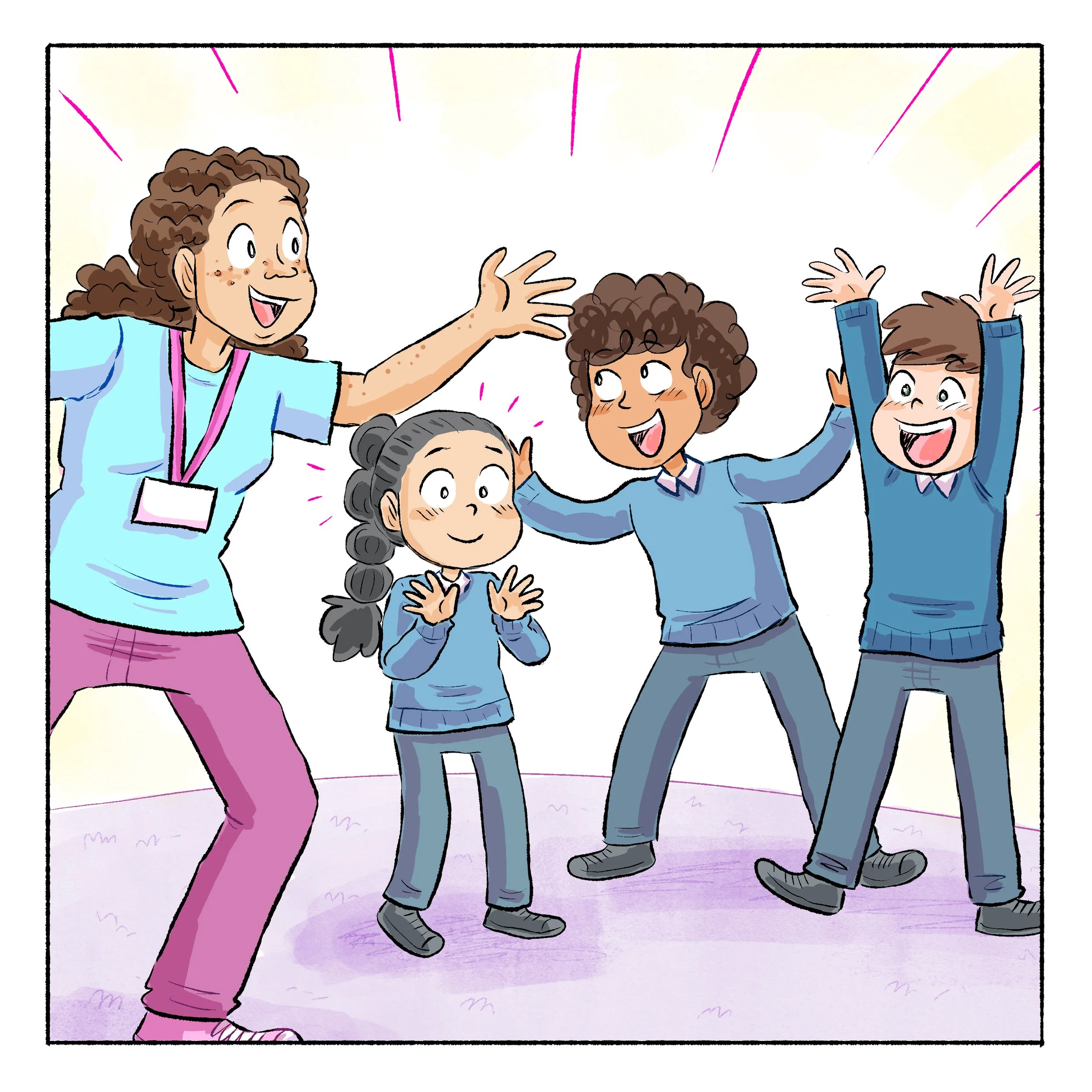
The children experience Speech Bubbles through the lens of play, creativity, storytelling and performance. These elements are intrinsic to the practice and are embodied by the drama practitioners who facilitate the sessions. As well as working on Speech Bubbles these practitioners have portfolio careers including work as: stage and screen actors, youth theatre directors, designers, playwrights, performance poets, musicians and creative facilitators working across commercial, community and educational settings.
This connection with arts and culture is strengthened by our collaborative work with other sectors, creatively bringing together theory and practice from early childhood education, oracy education, speech and language therapy and more recently academic studies around linguistic justice.
From inception Speech Bubbles has been deeply influenced by the practice and writings of Vivian Gussin Paley. Vivian was an American pre-school and kindergarten teacher and researcher into early childhood education. She wrote powerfully about the importance of storytelling and fantasy play in children’s learning and development. From Vivian’s work we directly attribute the practice of collecting individuals’ stories, writing them down exactly as they are told and acting them out with a group of peers. We also hold dearly to her claim that PLAY is the work of childhood.
Every week in a Speech Bubbles school, the children inhabit the triumvirate of roles that make a theatre event: storyteller, performer and audience.
New theatre is being made.
All the other things…
Launched in 2009 following the successful pilot programme Speak Out, Speech Bubbles was developed with a distinct purpose: to use small-group drama strategies to support young children who needed opportunities to expand their confidence, communication and participation.
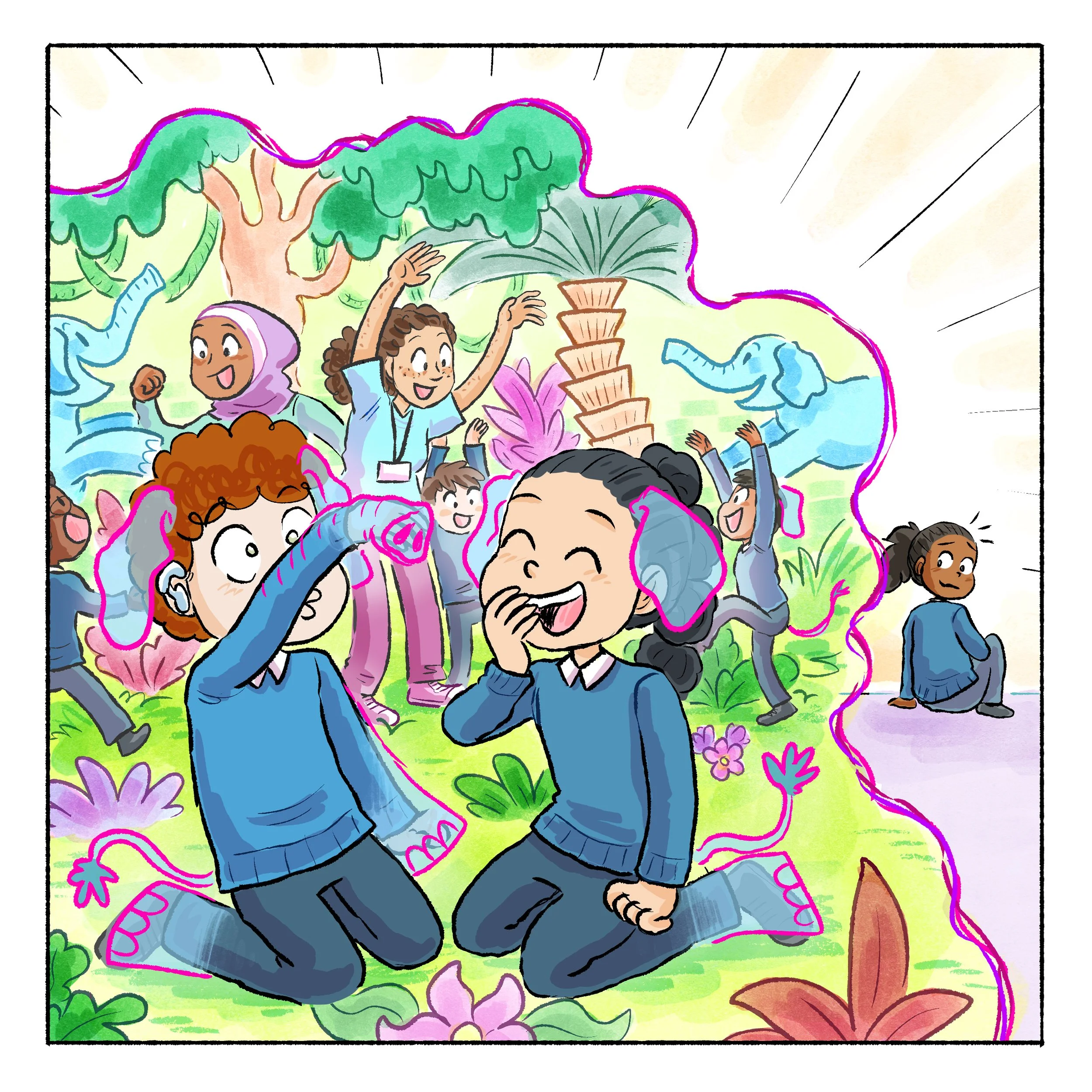
At every stage, the work with children has been facilitated by a creative practitioner in collaboration with school staff. At every stage of programme development, we understood the creative story elements as central to the benefits children showed in speaking and listening, wellbeing, confidence and engagement with learning. However, the pressure of fundraising, and the immediate need for schools to find ways of supporting the many children struggling to communicate in their settings, meant that the language surrounding the programme and the direct research and evaluation focused on children’s communication needs and benefits to speaking and listening and behaviours for learning rather than creative practice and experience.
Growing a programme in austerity years, with school budgets squeezed and funders receiving multiple-applications for limited resources, we needed to make the case in the language most likely to be heard - improvements in speaking and listening.
From 2010, there was a significant shift in social and education policy, coming from at first a coalition and then Conservative Government. Flagships programmes of the previous administration were dropped, Creative Partnerships and Every Child Matters disappeared from the centre of the agenda, while academic knowledge and measurable attainment became more dominant. Creativity moved from the centre of education policy to the margins. Personal and social wellbeing also became less prominent for a period before returning to the education debate in around 2015, as concerns about children’s mental health grew.
We followed the trends with our research and programme descriptions, while continuing to refine our practice, maintain the emphasis on creative storytelling and theatre-making, and support artists working with school staff.
Now we want to use the opportunity of the Curriculum and Assessment review and the development of a new primary curriculum to reassert the importance of arts in education and the power of creative approaches to support all children to thrive. For the last school year, we have been asking a sample of schools to assess the creativity benefits of taking part in Speech Bubbles. Teachers completed pre and post project surveys, practitioners reflected and the children were asked to share their experiences.
What do we mean by creativity?
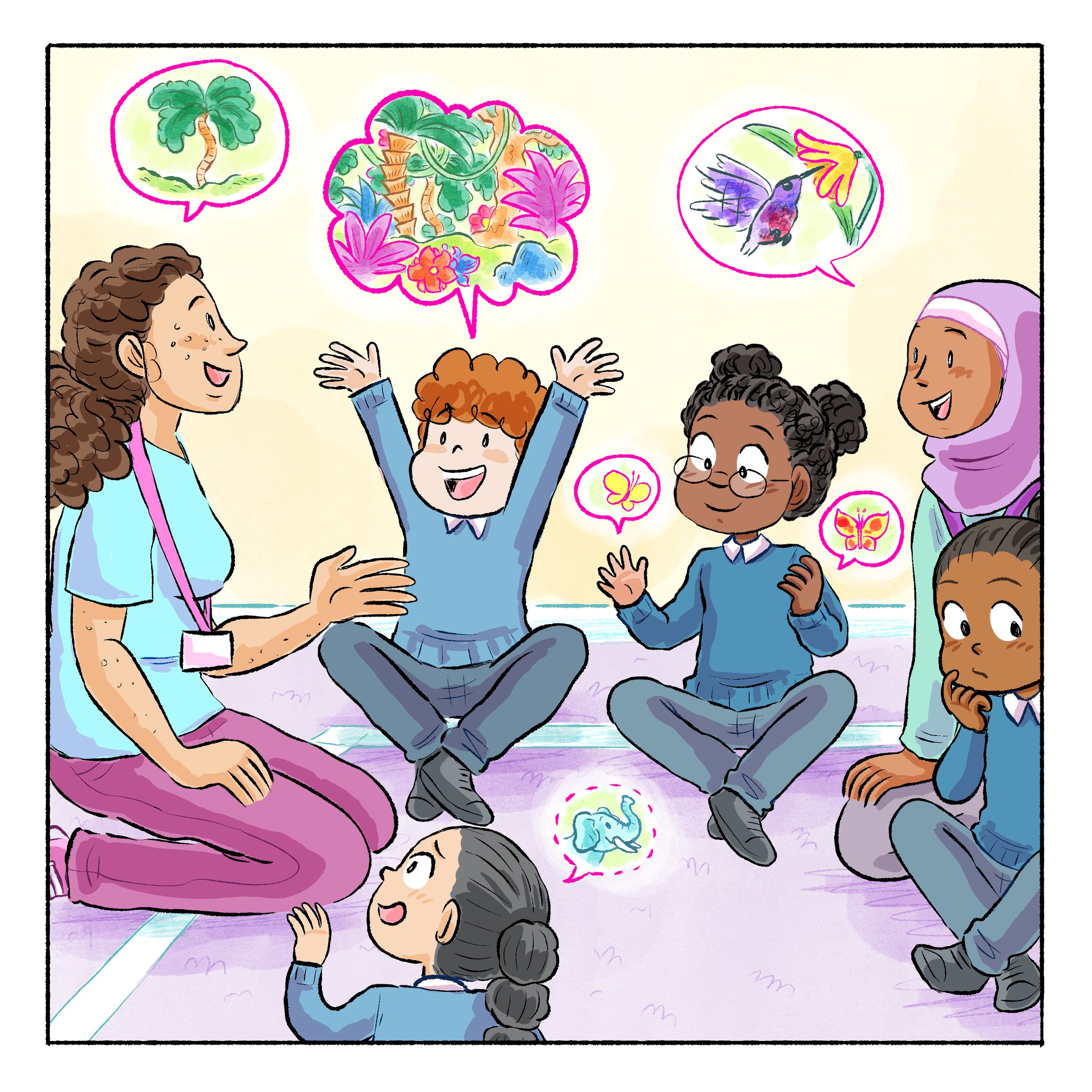
There are many definitions of creativity. A common one is the capacity to combine ideas in new ways to generate something original. In Speech Bubbles, we see that every week when children offer a unique story for performance. Tests for creativity include the Alternative Uses Task, which attempts to assess creative thinking by asking, ‘How many uses can you think of for a brick?’ There, of course, isn’t a correct answer, but the answers people give can be reviewed for originality and flexibility as well as quantity. The task has a similarity with the drama game ‘This is not a…’, where an object, maybe a pen, is introduced and the facilitator says, ‘This is not a pen, it’s a…’ and they mime using it as something else — perhaps pretending it is a hot dog, a dart, a lipstick, a mini rocket ship… I could go on!
We wanted a measure that busy teachers would easily understand, could be quantified and most importantly connected with the Speech Bubbles practice. We wanted to consider engagement and personal development not abstract ideas of artistic value or a limiting notion of being talented. We started with the work of Bill Lucas, Guy Claxton and Ellen Spencer on the Five Creative Habits: imaginative, inquisitive, disciplined, collaborative and persistent.
From there, and through many discussions with teachers, we ended up with five questions for the referring teacher to answer about each pupil before and after the programme.
· Shows curiosity and a positive approach to new experiences?
· Shows imagination through thinking up different creative ideas to a problem or task?
· Can take creative risks – is able to try new things when unsure of the outcome?
· Can reflect on their experiences and ideas and use that to improve?
· Can work well with other children? (e.g. sharing creative ideas or working together on creating something new)
What did we find?
We asked a sample of schools to look directly at creativity in Speech Bubbles, alongside the communication, confidence and participation outcomes we have measured for many years. The findings were encouraging. Most children showed measurable improvement, and the gains in creativity were statistically significant. Teachers reported that 82% of children showed improvements in creativity, with 44% showing clear to striking improvements.
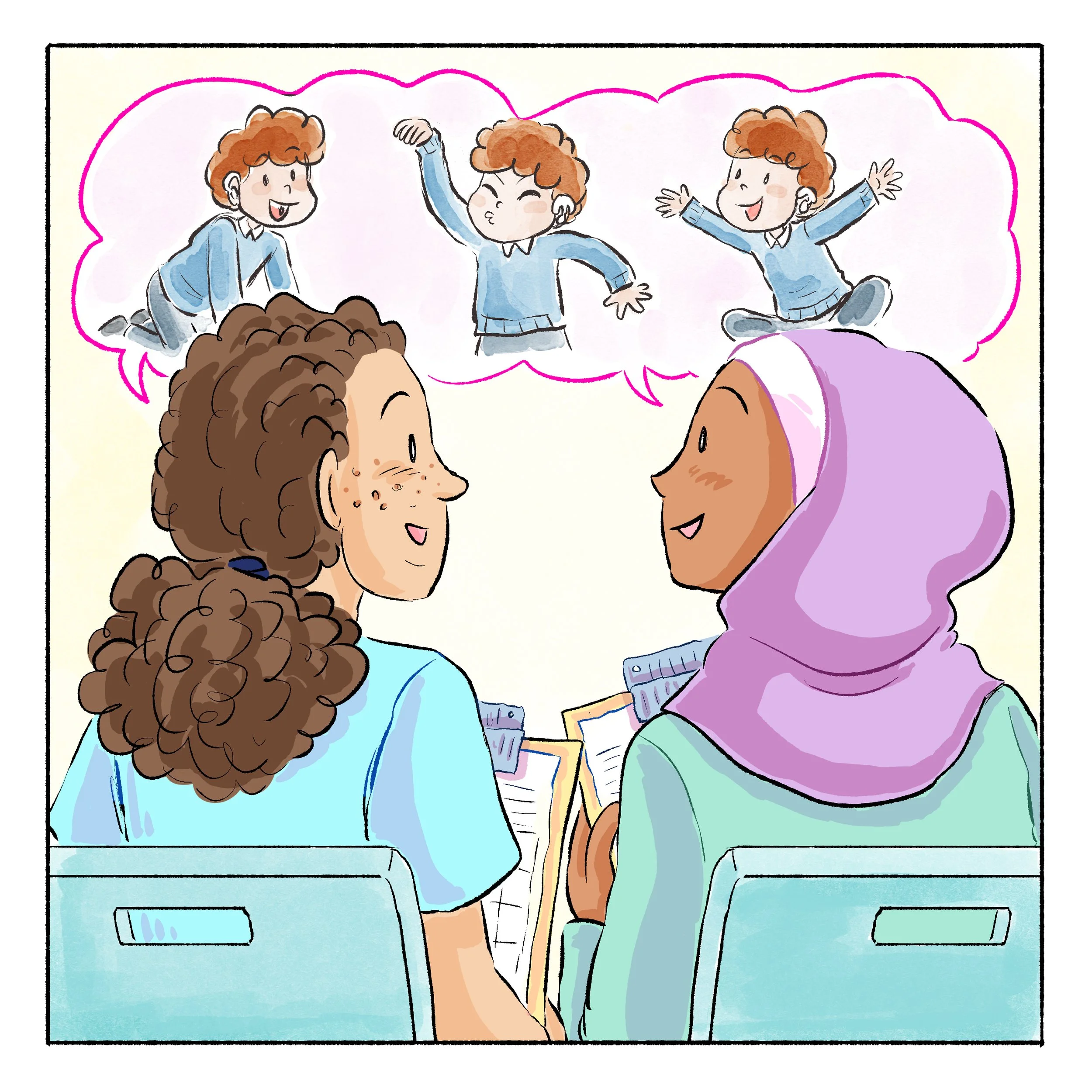
What felt particularly important was not simply that creativity improved, but how closely teachers connected it with confidence, communication and engagement. Creativity was not described as a separate arts outcome it appeared to be part of how children found new ways to take part, share ideas, listen to others and have a go.
From the teacher post project comments…
A is regularly asking questions and engaging more confidently in discussions.
B is more willing to engage with others, share ideas and participate in discussions.
C is learning to see mistakes as opportunities to learn and improve.
D is showing greater focus, stamina and attentive listening.
E is using more adventurous vocabulary and greater creativity in writing.
In structured conversations and focus groups, we gathered qualitative evidence from the drama practitioners and the children.
The drama practitioners talked about children becoming more willing to have a go, ideas becoming more imaginative, children taking more creative risks, and increased willingness to build on another person’s idea. They specifically talked about movement and gesture as ways of expressing creative impulses.
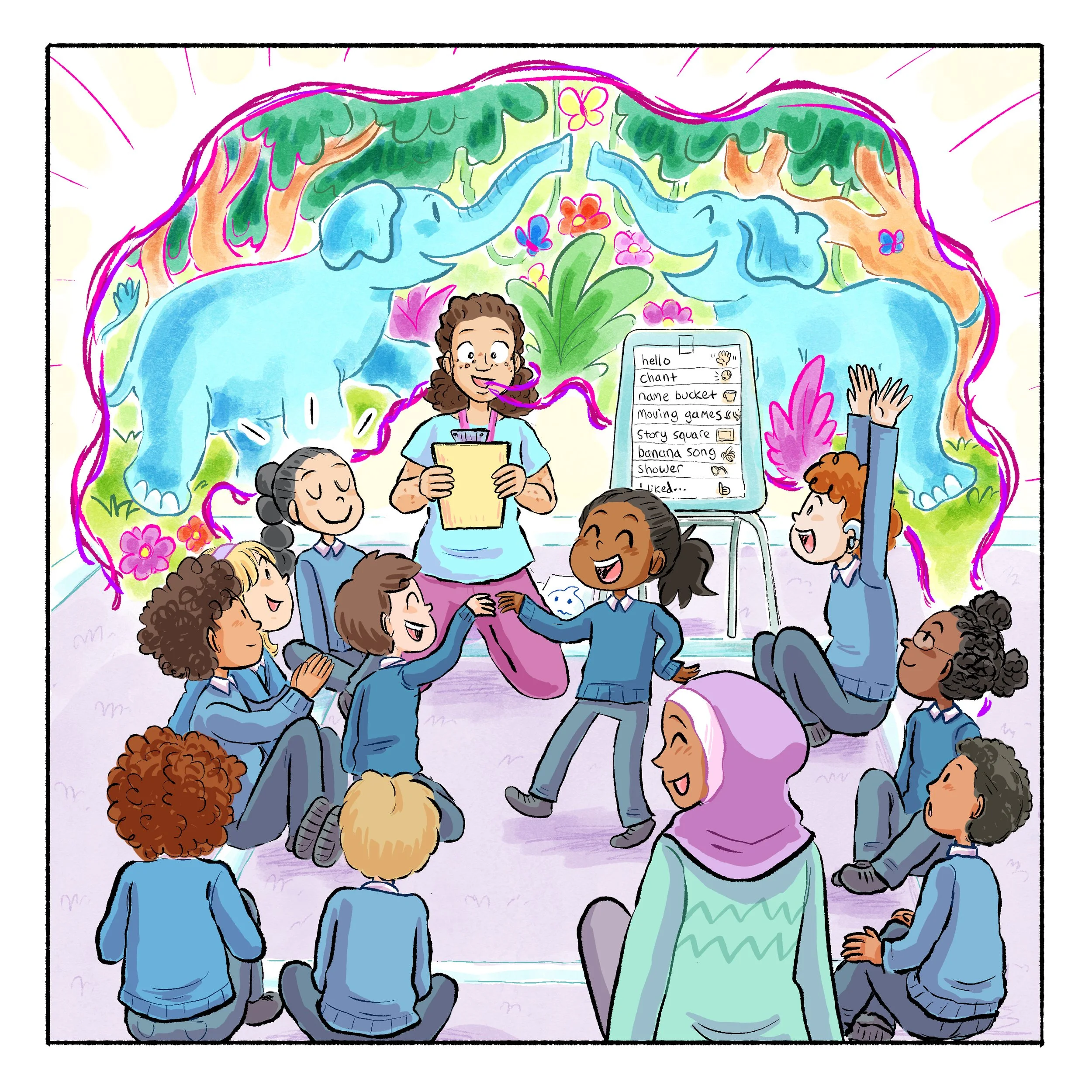
The children talked about concrete things that they did: acting in the story square, playing the games and pretending to be characters and things. They extended that to say things like Speech Bubbles made their ideas bigger and helped their bodies feel calm.
The full Creativity Evaluation Report explores the data, methodology, limitations and implications in more detail. Here, the important point is simpler: the teachers, the children and the drama practitioners could all see how the creative approach was supporting communication, engagement and confidence.
As with any school-based evaluation, this evidence should be read with care. It does not claim that creativity develops in a straight line, or that one measure can capture everything children gain from creative practice. What it does show is that teachers, practitioners and children could all identify meaningful changes in how children approached ideas, took part with others and used their voices.
Why does this matter?
This matters because creativity is still too often treated as an addition to the “real” business of school: valuable, but secondary to literacy, numeracy or even speaking and listening. Perhaps this tells us that, much more than an extra, creativity can be a central pillar to hold up the primary curriculum. Yes, through distinct arts practice like theatre-making and storytelling, but also as a way of approaching all curriculum areas.
Returning to the child storyteller
At the start of this article, a child sits beside a drama practitioner who has their notebook open and a pen ready. The invitation is simple: “What’s your story?” And week after week, in school after school, the stories pour out: dinosaurs, princesses, trips to the park, trips to the shops, sleepovers, exciting adventures, tales of lost friendships and loneliness, new friendships, tales inspired by folk tales, TV shows, books, YouTube sensations and real life.
Vivian Gussin Paley argued that children make sense of their world through storytelling, fantasy and play. Speech Bubbles sits firmly in that tradition. Each week children bring stories that become performances, and performances that become shared experiences. Through them, children practise communication, listening, risk-taking, imagination and belonging.
Creativity is the beating heart of our communication programme. It is the guiding star, the very essence of what we do. It is the creativity of the children, the school staff and the drama practitioners that feeds communication, participation and belonging.
Creativity is not the extra, it is the how and the why.
Read the full Creativity Evaluation Report, prepared and written by Jacqueline Harrison here: Research, Reports & Writing — Speech Bubbles